

¿Quieres leer esto en español? → Un paseo por los mercados callejeros de Colombia
🌿 Note from Catalina:
This blog comes from a neurodivergent mind and an immigrant heart. It’s a mix of memories, plants, recipes, travels, and reflections—no straight lines, just stories from a brain that works differently.
I write to be the voice I once needed—for anyone who’s ever felt out of place, misunderstood, or too much. You’re not alone.
Food… OMG. I really enjoy eating.
Growing up, I was very picky with traditional food. My first bandeja paisa—yes, the main dish of my city—I ate while living in Miami in my twenties. For real. But don’t get me wrong—I did eat beans. Let me explain.
In paisas’ houses, we eat beans all the time, but it’s usually a bean soup with chicharrón, patacones (or tostones), hogao, etc. That’s not bandeja paisa—that’s fríjoles (or for some of us, frisoles).
My grandma taught me how to cook only the things I liked, and I still make my own versions. But over time, some things just came naturally. Now, in my 40s, I enjoy eating almost everything.
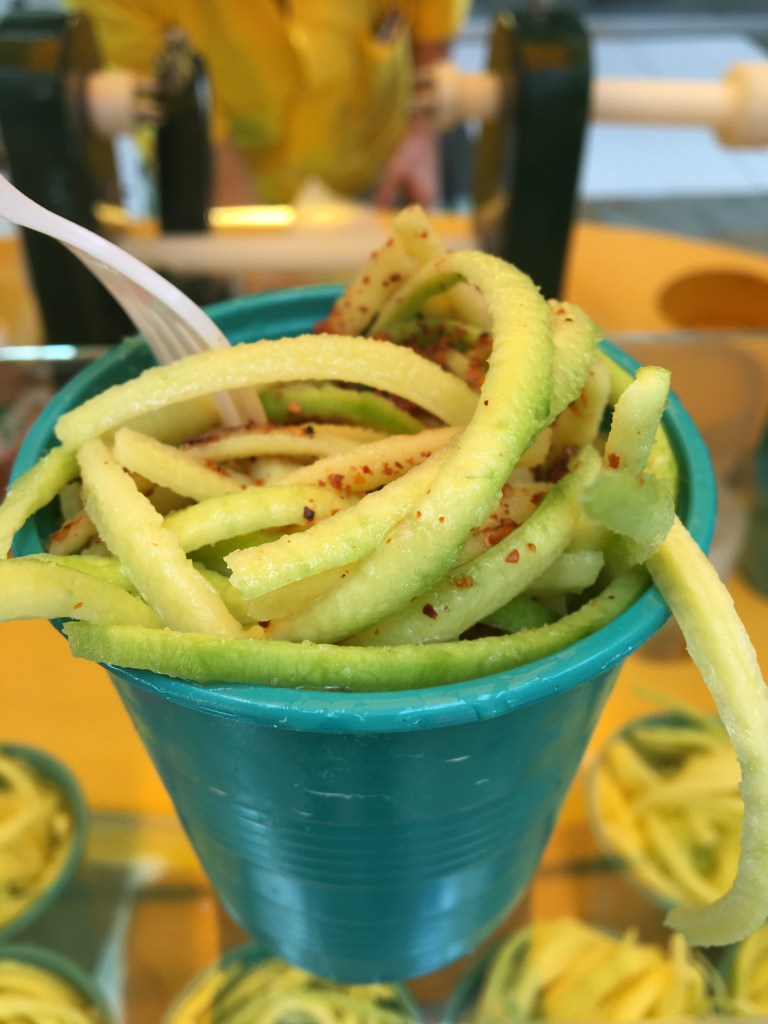
Colombians—like most Latin Americans—love to eat, and lunch is the most important meal of the day. I don’t exactly miss Colombian food, because I can cook most of it. Plus, living near Miami makes it easy to find ingredients or close-enough versions. But it’s different when it comes to street food—mango biche, solteritas, patacones, Colombian-style hot dogs, and most importantly: hot potato chips and fried papa criolla.
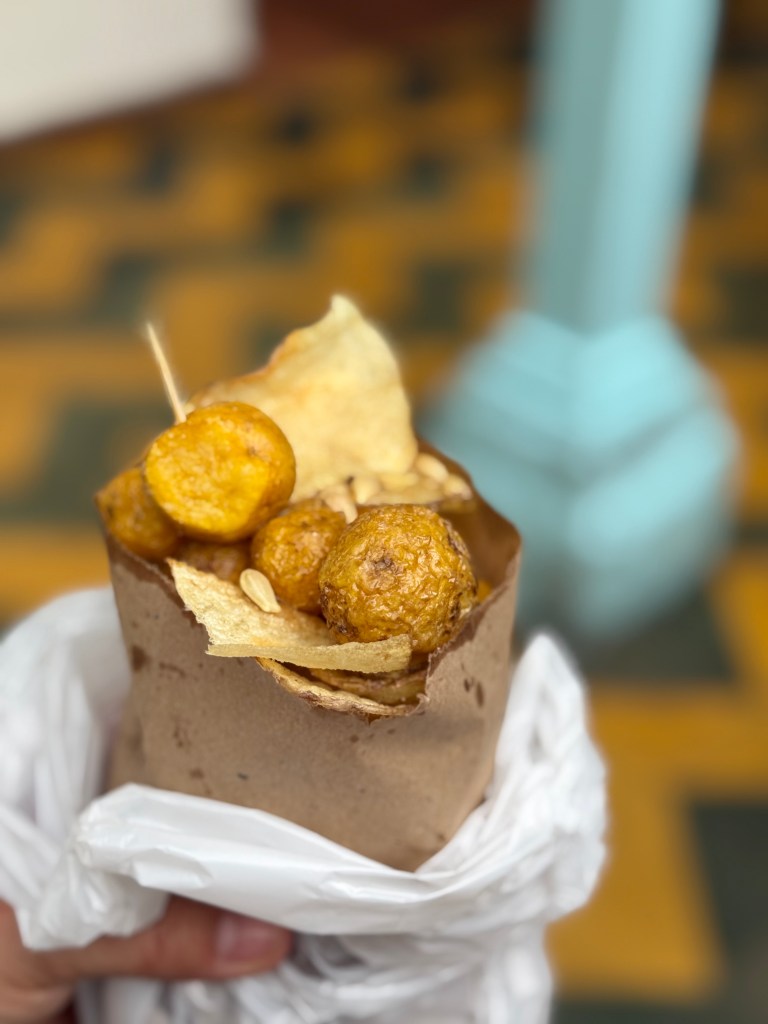
When my sister was little, she used to say that if she ever won the lottery, she would buy a potato cart. (Un carrito de papas—a little wheeled cart with a giant pot of hot oil.) That’s how serious our love for fried food is.
Living abroad, especially when you go to a soccer match or a concert, you really notice how different food culture is. In the U.S., there are so many candies and sweet snacks. But for us, corn on the cob is salty—we eat it with butter and salt. Our mangos are green, and we add lime and salt. Yes, we eat sweets too, but we definitely have a deep love for oily, salty, flavorful snacks—chicharrón, chorizo—and always with lime. And as paisas, we accompany everything with arepa, empanadas, pandebonos, pandeyucas… the list goes on.

Honestly, one of my biggest concerns when I moved abroad was that I wouldn’t find good arepas. But it wasn’t like that. I still eat arepa every single day.
One of my favorite food shows is Taco Chronicles on Netflix. I love how they describe food, the stories, the people behind it—it would be magical if they made a version in Colombia.
You know, I say Colombia like I know all about Colombian food—but really, I mean Medellín, the city where I grew up. Colombia is a big country, and it has so much regional diversity. Because of our geography and many different climates, we have different accents, skin colors, and of course—different foods. Did you know we have over 70 types of arepas? We don’t eat spicy food, but we love to mecatiar—to snack.

And that’s something I carry with me. Even though I live far away, food is how I stay connected—not just to my culture, but to my family. These days, my mom and I share recipes all the time. We talk about what she has over there, what I have here, and come up with different ways to cook the same dish. Sometimes, we even watch food shows together and send each other pictures of our own versions. It’s our way of staying close, of sharing something joyful and familiar, even from a distance.
I might not be able to recreate those paper bags full of street chips, but I can still bring pieces of home into my kitchen—and now, I’m ready to share a few of those recipes with you, too.
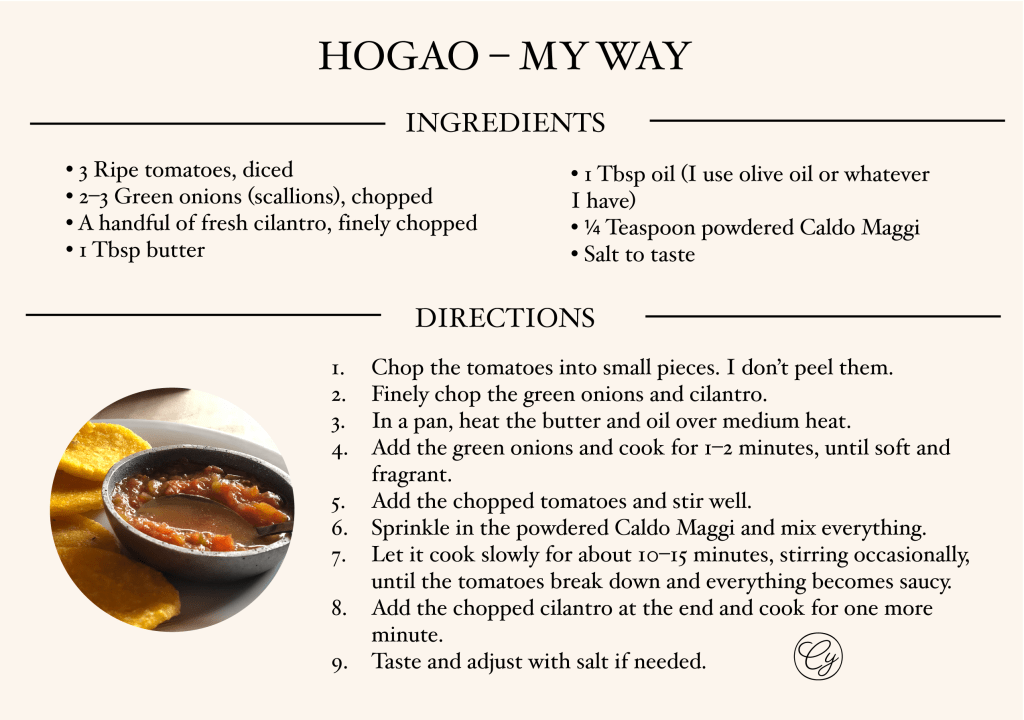
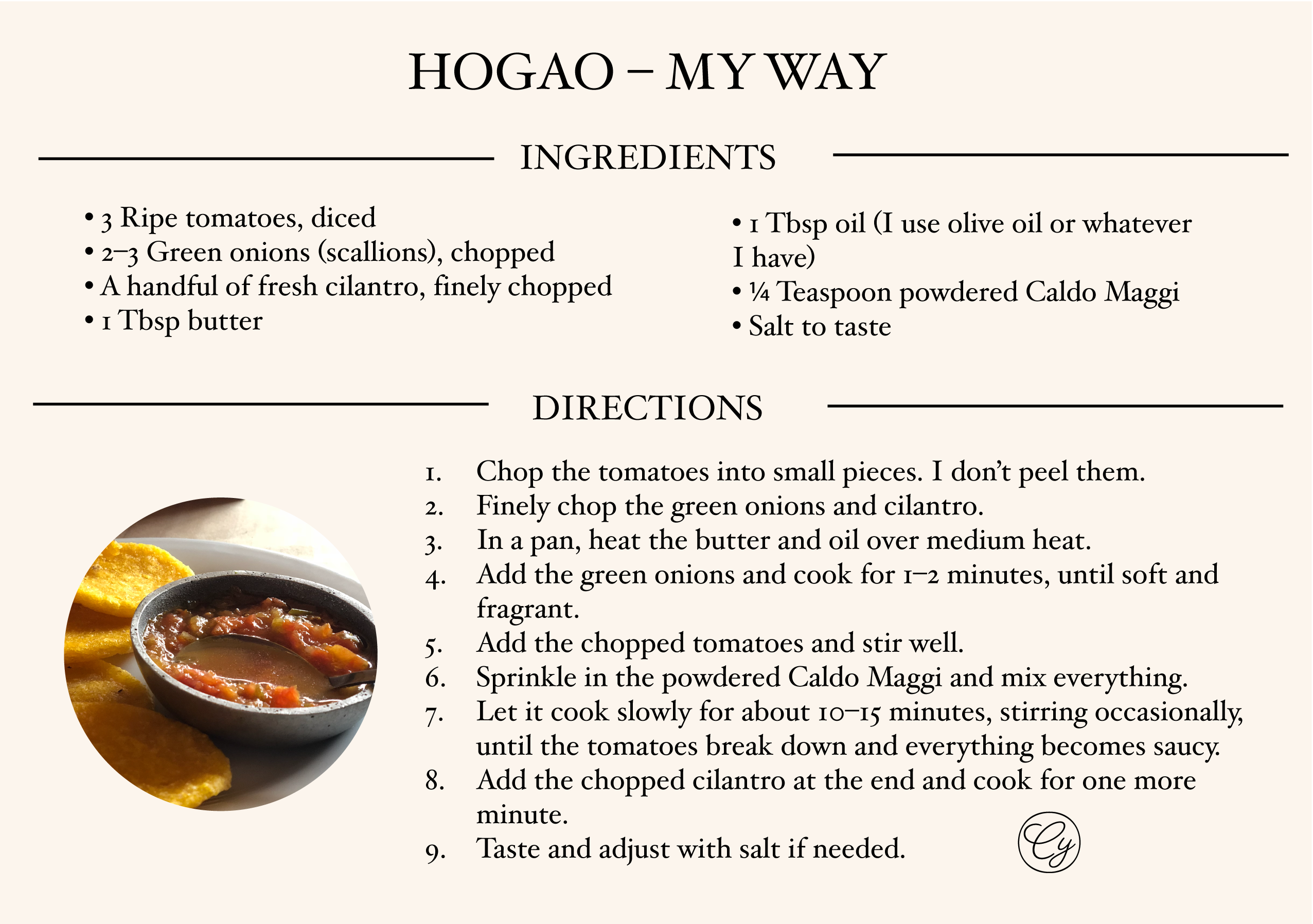
🌱 Hogao – My Way
This is how I make it at home—simple, comforting, and full of flavor. It’s not fancy, just real.
Ingredients:
- 3 ripe tomatoes, diced
- 2–3 green onions (cebolla larga), chopped
- A handful of fresh cilantro, finely chopped
- 1 tbsp butter
- 1 tbsp oil (I use olive oil or whatever I have)
- ¼ teaspoon powdered Caldo Maggi
- Salt to taste
Directions:
- Chop the tomatoes into small pieces. I don’t peel them, but you can if you prefer it smoother.
- Finely chop the green onions and cilantro.
- In a pan, heat the butter and oil over medium heat.
- Add the green onions and cook for 1–2 minutes, until soft and fragrant.
- Add the chopped tomatoes and stir well.
- Sprinkle in the powdered Caldo Maggi and mix everything.
- Let it cook slowly for about 10–15 minutes, stirring occasionally, until the tomatoes break down and everything becomes saucy.
- Add the chopped cilantro at the end and cook for one more minute.
- Taste and adjust with salt if needed.
How I Eat It:
With patacones, arepas, rice, boiled potatoes, on top of beans—or honestly, just with a spoon.

 Catyobi
Leave a comment